Physical Phenomena
Short video lessons on motion and forces, waves, light, mirrors and lenses, electric fields and circuits.
- 40 lessons
- Lesson 1 free
- Video
Open lesson 1 for free in the prostepmediaAR app.
All 40 lessons
Taught with short videos.
-
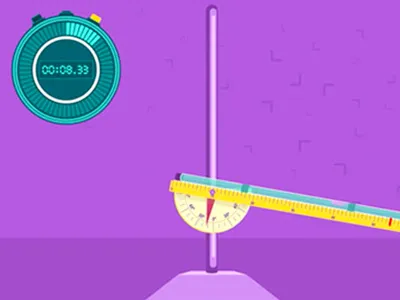 Lesson 1Free
Uniform & Rectilinear
Uniform rectilinear motion, velocity, and the relations between distance-time and velocity-time graphs.
-
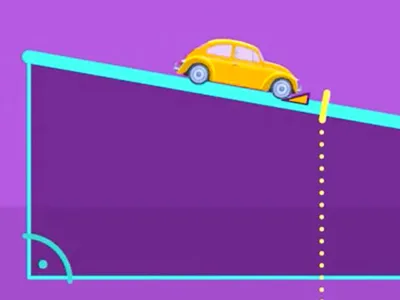 Lesson 2
Acceleration / Deceleration
Characteristics of acceleration and deceleration, the role of forces, and velocity-time and distance-time graphs.
-
 Lesson 3
Drop the Ball
Free fall, gravitational acceleration, and the key relations of vertical throwing.
-
 Lesson 4
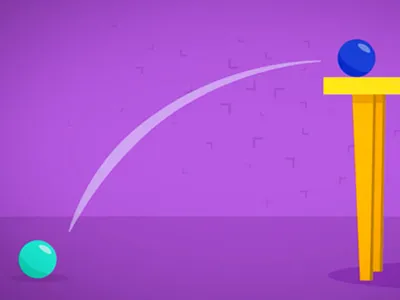
The Big Shot
Horizontal throwing, the effect of gravity, addition of velocity vectors, and the parabolic trajectory.
-
 Lesson 5
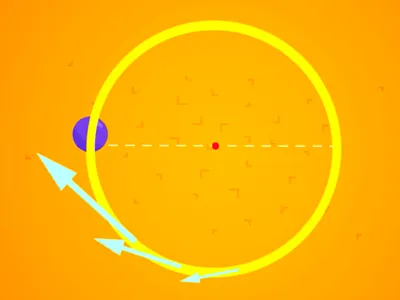
Round and Round
Circular motion, circumferential speed and angular velocity, period, frequency, and centripetal and tangential acceleration.
-
 Lesson 6
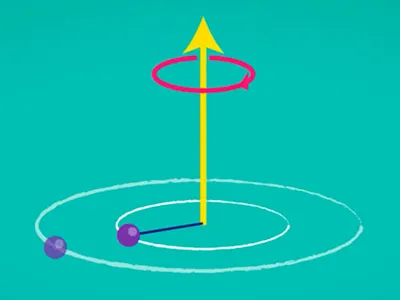
Swirl and Spin
Angular momentum, moment of inertia, angular velocity, and the law of conservation of angular momentum in rotational motion.
-
 Lesson 7
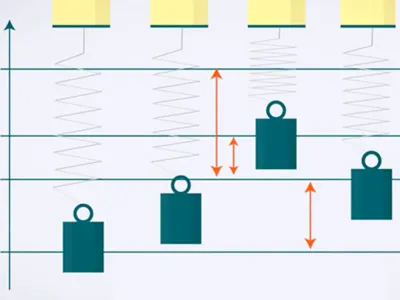
Good Vibes
Oscillatory motion and its characteristics: amplitude, period, frequency, and the relationship between harmonic oscillation and uniform circular motion.
-
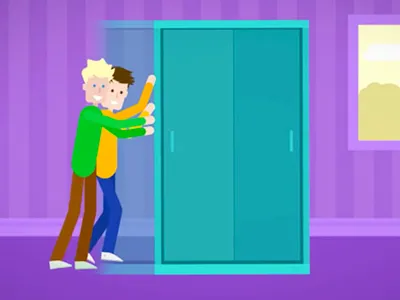 Lesson 8
Static and Kinetic
Static and kinetic friction, the magnitude of frictional force, its uses, and its heat-generating effect.
-
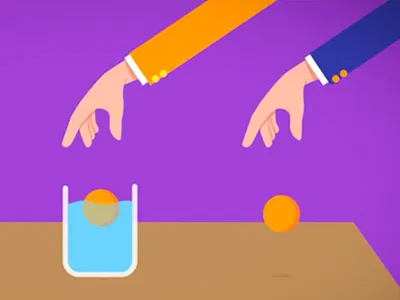 Lesson 9
Resistance of Media
Resistance of media, factors affecting its magnitude, and its role in assisting and hindering motion.
-
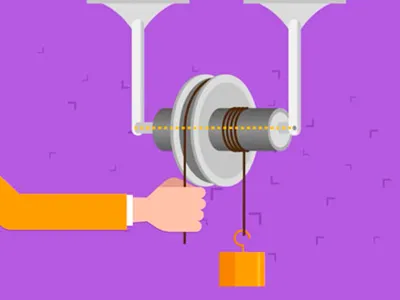 Lesson 10
Make Lifting Easier
One-sided and two-sided levers, the wheel and axle, torque, and work performed using simple machines.
-
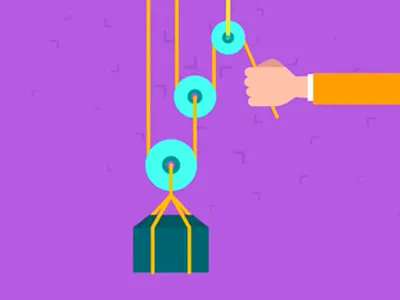 Lesson 11
A Pulley that Won’t Bully
Fixed and movable pulleys, and the operation and force relations of compound and Archimedean pulley systems.
-
 Lesson 12
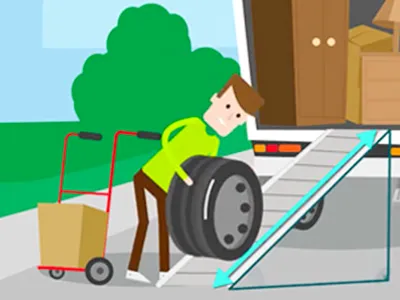
Up the Slope
Inclined planes and wedges, the relations between force and distance, and the effect of friction.
-
 Lesson 13
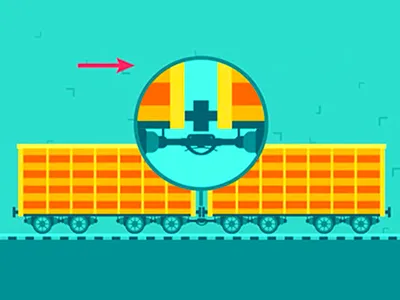
Let's Collide
Elastic and inelastic collisions, conservation of momentum, and the role of energy and deformation.
-
 Lesson 14
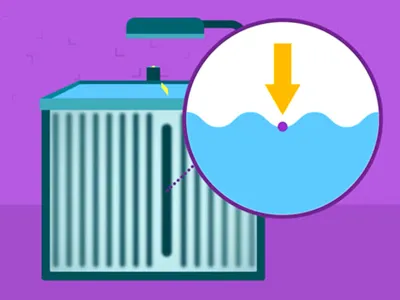
Riding Waves
Mechanical waves, wavelength, amplitude, period, frequency, propagation velocity, and the characteristics of wavefronts.
-
 Lesson 15
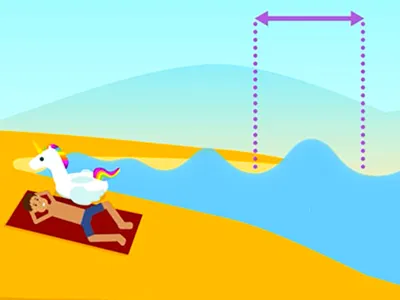
Refraction / Reflection
Wave refraction and reflection, refractive index, total internal reflection, and the phenomenon of light refraction.
-
 Lesson 16
Standing Waves
Formation of standing waves, interference, and the role of nodes, antinodes, and resonance.
-
 Lesson 17
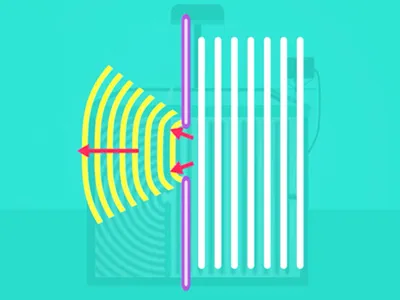
Mind the Gap!
Diffraction of waves, the Huygens-Fresnel principle, interference, and the fundamentals of Fresnel lens operation.
-
 Lesson 18
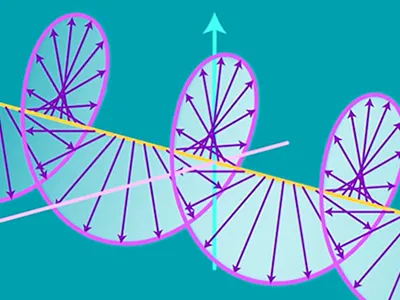
Polarisation
Polarisation, the vibration plane of transverse waves, and the operation of polarisers and polarising filters.
-
 Lesson 19
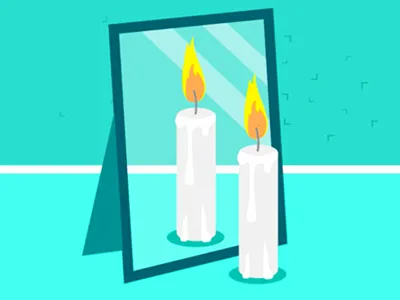
Mirror, Mirror on the Wall…
Image formation by plane and convex mirrors, light reflection, and characteristic optical paths.
-
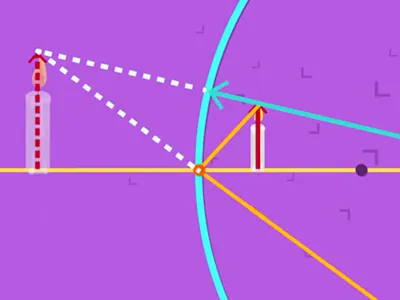 Lesson 20
In the Concave Mirror
Image formation by concave spherical mirrors, focal point, most important optical paths, and the effect of object distance.
-
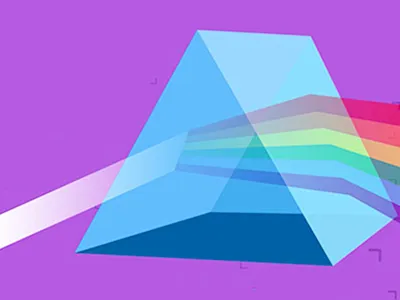 Lesson 21
Let's Refract the Light
The law of refraction, operation of a plane-parallel plate and prism, and dispersion of light.
-
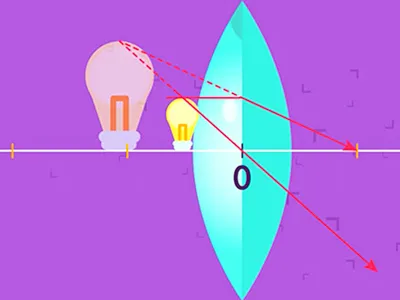 Lesson 22
Collecting Light
Operation of converging lenses, typical optical paths, focal length, and image formation depending on object position.
-
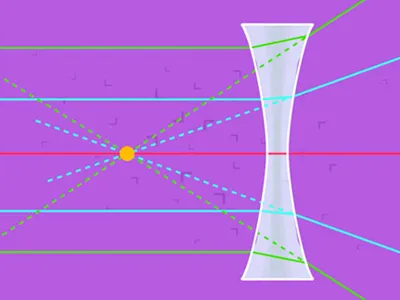 Lesson 23
Diverging Lenses
Construction, focal point, image formation, and applications of concave diverging lenses.
-
 Lesson 24
Distant Examinations
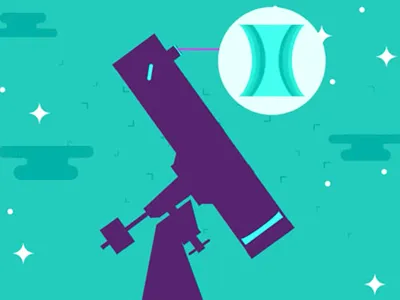
Characteristics of telescopes, increasing the angle of view, and applications of refracting and reflecting telescopes.
-
 Lesson 25
The Electric Field
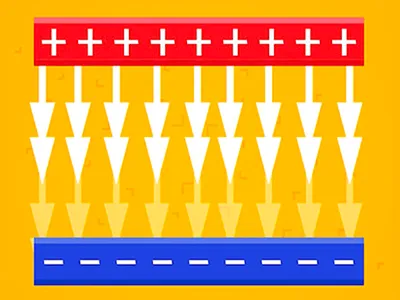
Electric field, electric field strength, field lines, test charge, and the principle of superposition.
-
 Lesson 26
Work and Voltage
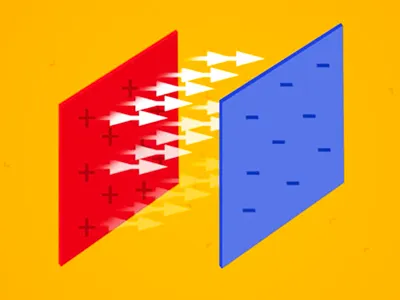
Work done by the electric field, the concepts of voltage and potential, and their relation to electric field strength.
-
 Lesson 27
Storage for the Charges
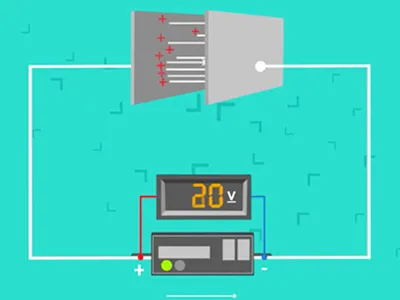
Types and construction of capacitors, their capacitance and charge, and the concept of permittivity.
-
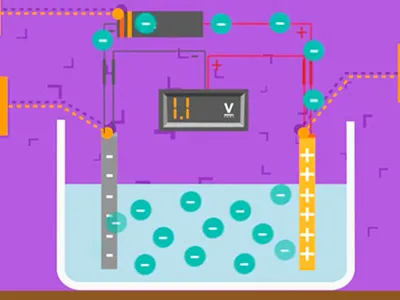 Lesson 28
Charges in Motion
Electric current, movement of charge carriers, current, current direction, and the different physical effects of electric current.
-
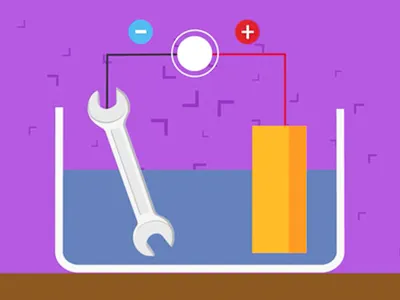 Lesson 29
Electrolysis
Conduction in electrolytes, electrolysis, electrolytic dissociation, and Faraday's laws of electrolysis.
-
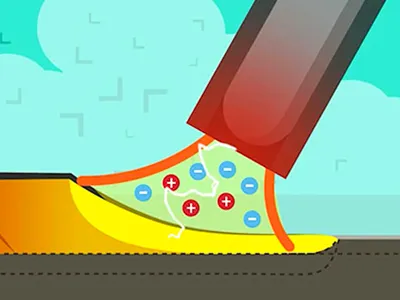 Lesson 30
Current in Gas
Electric current in gases, ionisation, electrical discharges, and the formation of lightning and thunder.
-
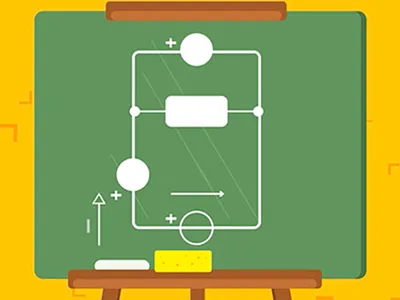 Lesson 31
Circuit Made Simple
Components of a simple circuit, voltage and current measurement, electrical resistance, and Ohm's law.
-
 Lesson 32
Obstacle for the Current
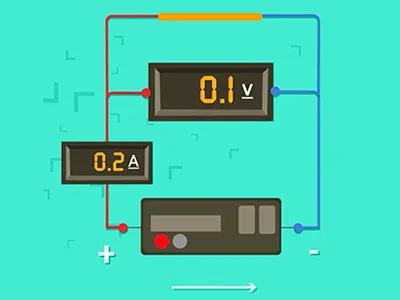
Resistance of conductors depending on length, cross-section, resistivity, and temperature.
-
 Lesson 33
With Several Loads
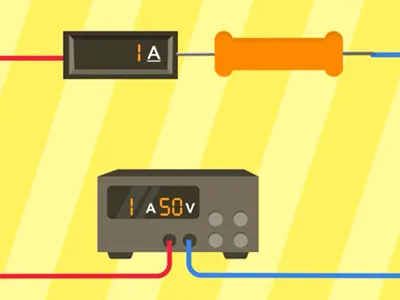
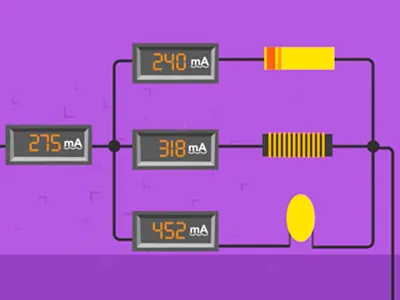
Series and parallel connection of loads, current and voltage relationships, and equivalent resistance.
-
 Lesson 34
Short-circuit vs Open-circuit
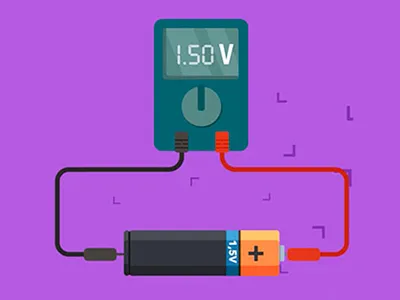
Internal resistance and terminal voltage of sources, open circuit, short circuit, and the dangers of short-circuit current.
-
 Lesson 35
The Conductor as a Magnet
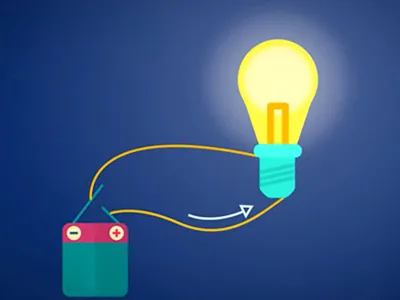
Magnetic field of a current-carrying conductor, magnetic induction, right-hand rule, coils, and ferromagnetic materials.
-
 Lesson 36
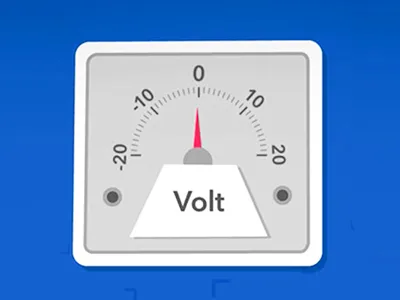
Between the Ends
Motional electromotive force, Lorentz force, induced voltage, Lenz's law, and the operation of an electric generator.
-
 Lesson 37
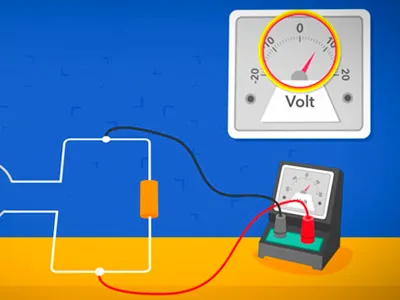
Standing Still
Transformer emf, self-induction, inductance, and voltage produced by a changing magnetic field.
-
 Lesson 38
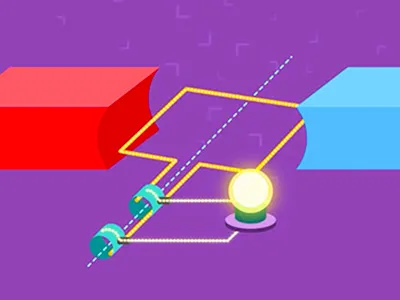
Current Back and Forth
Alternating current and voltage, instantaneous and RMS values, frequency, and sinusoidal waveform.
-
 Lesson 39
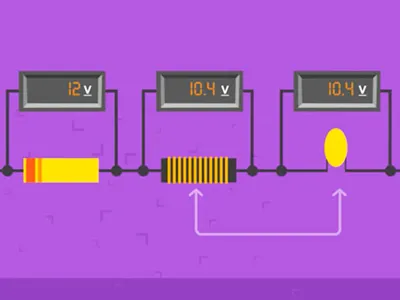
Three in Series
Series RLC circuit, ohmic resistance, inductive and capacitive reactance, impedance, phase difference, and resonant frequency.
-
 Lesson 40
Pass on the Energy
Electromagnetic oscillations in an LC circuit, energy transformation, natural frequency, damping, and Thomson's formula.

Start with a free lesson.
The first lesson of every topic is free, with no account and no payment details. Unlock the rest when your family is ready.
Coming soon on Google Play